The proper installation of scaffolding casters is incredibly important for a safe, stable workspace in mobile access systems. At Go Casters, we frequently see construction projects delayed or employees’ safety compromised due to improperly installed scaffold caster wheels. Even the strongest mobile access systems can be rendered useless by installation errors. Therefore, by understanding the 5 most common installation errors with scaffolding caster wheels, you will protect both employee and equipment safety.
The correct installation of scaffold wheels affects load capacity and mobility control, in turn affecting the overall structural stability of the mobile access system being built. This also has a greater impact when setting up scaffolding wheel heavy duty.
This guide will cover the 5 most common installation mistakes with scaffold wheels, the causes of these issues, and how Go Casters helps customers avoid them.
Why Proper Installation of Scaffolding Caster Wheels Matters?
Mobile scaffold systems provide flexibility and convenience. However, improperly installed casters can quickly make the convenience of a scaffold unsafe. If the wheel is not properly secured, the scaffold will suddenly shift. This increases fall hazards for workers and potentially causes structural instability. Improper installation of your equipment will also affect how weight is distributed across your scaffold. If you do not have your load balanced, you could significantly reduce the life of both your wheels and the scaffold structure. Incurring unnecessary repairs to your equipment adds costs to ongoing maintenance and reduces the useful life of your scaffold system.
As such, we have continually emphasized that proper installation is just as critical as obtaining the finest quality wheels for scaffolding systems.
Understanding Load Capacity Before Installation
One of the most common mistakes involves ignoring load calculations. Many assume that if a caster fits physically, it will handle the load. However, this assumption creates serious safety risks.
Failing to Calculate Total Weight
Before installation, we must calculate:
- Weight of the scaffold structure, weight of workers, and weight of tools and materials
- Additional dynamic load during movement
One more error is placing more weight on one side of a service or platform than on the opposite side. This creates an unbalanced stress condition in the scaffold, increases the risk of tipping, and causes other issues with the scaffolding. It is advisable to balance the weight at each caster point used for scaffolding.
Uneven Weight Distribution
Another mistake involves placing heavier loads on one side of the scaffold. This creates an imbalance in stress and increases the risk of tipping. Therefore, we recommend distributing weight evenly across all caster points.
Incorrect Attachment to Scaffold Frame
Even high-quality caster wheels for scaffolding cannot perform properly if the attachment points are weak.
Loose Fasteners and Improper Bolting
Loose bolts reduce structural integrity. During movement, vibrations loosen poorly secured connections even further. Consequently, this increases instability.
We always use proper-grade bolts and locking mechanisms during installation. Additionally, we double-check torque specifications to ensure secure fastening.
Using Incompatible Stem Types
With many different types of scaffolding casters, you can end up with a poor fit and unstable movement.
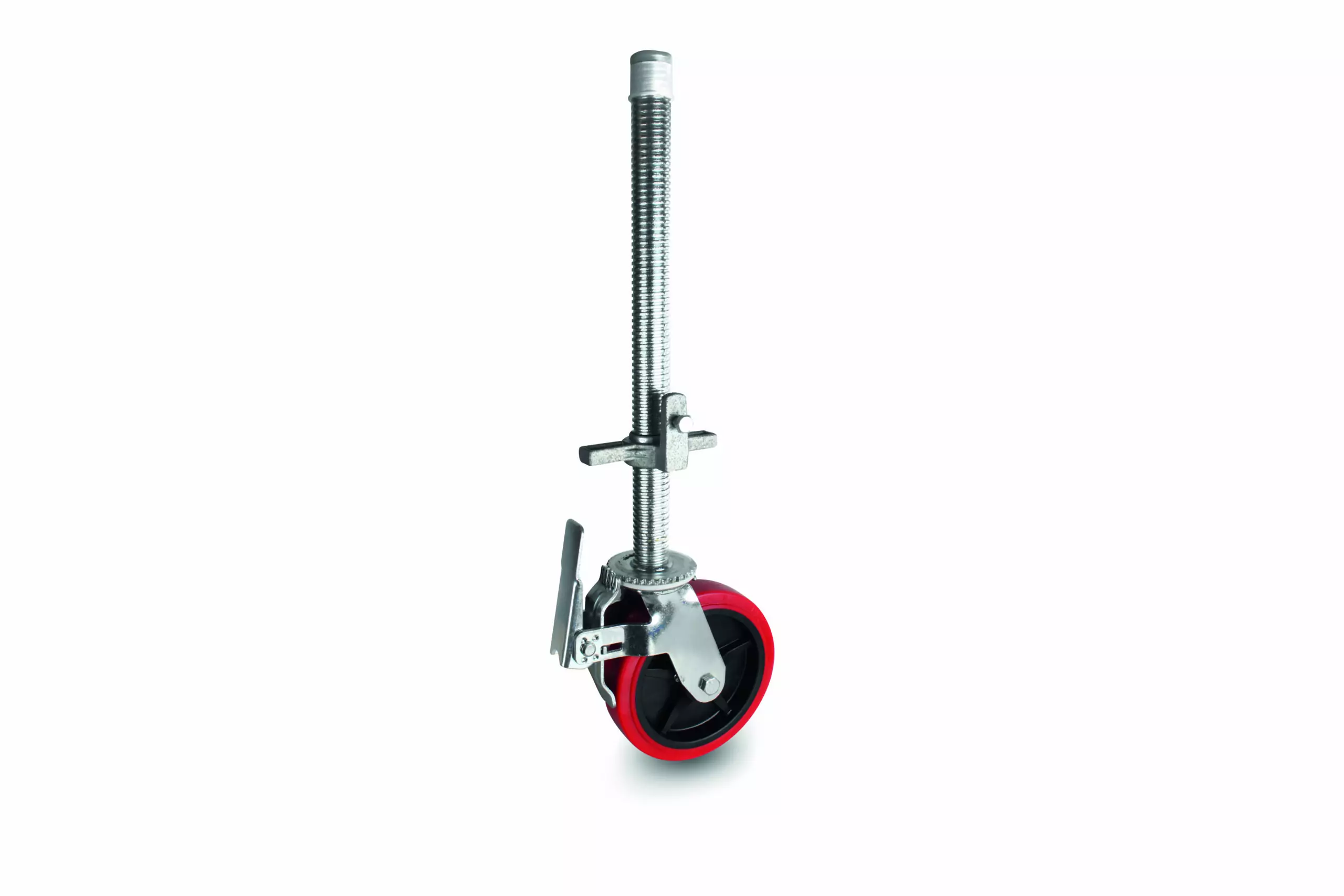
Before installation, we verify compatibility between the caster stem and the scaffold tube diameter. Proper alignment prevents unnecessary movement within the frame.
Ignoring Brake and Locking Mechanisms
Braking systems are critical for safety. Unfortunately, many installation errors involve incorrect brake positioning.
Installing Casters Without Functional Locks
Mobile scaffolds must remain stationary during use. If installers neglect to verify brake functionality, workers risk unwanted movement.
We always test swivel locks and wheel brakes after installation. Functional locks prevent rolling and rotation when scaffolding is in use.
Poor Alignment of Locking Systems
When the locking mechanism is off, you may not have a properly engaged brake. That’s why we make sure the brake contacts the wheel surface evenly and provides a strong lock under load conditions.
Choosing the Wrong Wheel Material for the Surface
Surface conditions significantly affect performance. However, many installers focus only on load capacity and overlook floor compatibility.
Hard Wheels on Uneven Surfaces: Hard wheels may struggle on rough surfaces. This increases vibration and structural stress.
Soft Wheels on High-Load Industrial Floors: Soft compounds may compress excessively under heavy loads. Consequently, rolling resistance increases.
We help clients choose scaffolding Wheels that match both surface conditions and load requirements.
Skipping Pre-Use Safety Inspections
Even perfectly installed scaffolding caster wheels require inspection before use.
Failure to Test Mobility: After installation, we always test movement under light load. This ensures smooth rolling and proper swivel action.
Ignoring Brake Testing: Brake systems must hold the scaffold firmly in place. Therefore, we test brakes under static load conditions before allowing workers to climb the structure.
Overlooking Height Adjustment Features
Many mobile scaffolding casters include adjustable stems for leveling. However, improper use of these features creates instability.
Uneven Height Adjustments
If one caster remains extended more than others, the scaffold tilts. This increases tipping risk. We ensure all casters are adjusted evenly and locked securely before operation.
Using Non-Heavy-Duty Casters for Demanding Jobs
Another major mistake involves selecting standard wheels for heavy-duty applications.
Underestimating Job Site Demands
Dynamic loading and rough terrain are common in both construction and industrial sites. That is why we recommend using scaffolding wheel heavy duty for extreme applications.
Heavy-duty casters provide heavier frame reinforcements and larger diameter wheels, along with increased maximum load ratings, than a standard caster. This development of stronger parts increases both safety and longevity.
Failing to Account for Environmental Conditions
Environmental exposure affects performance. Dust, moisture, and chemicals influence wheel durability.
Ignoring Corrosion Resistance: Outdoor job sites may expose metal components to moisture. Therefore, corrosion-resistant materials improve longevity.
Overlooking Temperature Impact: Extreme temperatures affect wheel compounds differently. We evaluate environmental conditions before recommending installation.
Training Installation for Safer Scaffolding Mobility
Proper installation of scaffolding caster wheels does not depend only on equipment quality. It also depends on the installation team’s knowledge and skills. Many job site issues occur because workers install scaffolding Wheels without fully understanding load ratings, brake systems, or frame compatibility. Therefore, training teams on correct installation procedures significantly improves safety and efficiency.
At Go Casters, we always encourage contractors to brief installation teams before setting up mobile scaffold systems. Teams can reduce the risk of injuries associated with scaffolding wheel heavy duty scaffold use during installation by following clearly defined procedures. Safety training on the proper use of scaffold systems gives users confidence and peace of mind when using the equipment.
Providing scaffold safety training enables companies to create a safe workplace by implementing and using a safe scaffold system. In addition, this will help prevent substantial repair costs and injuries that could occur without implementing safety and protection measures.
Neglecting Regular Maintenance After Installation
Installation is only the first step. Ongoing maintenance ensures long-term performance.
Skipping Routine Inspections
We recommend regular checks for:
- Loose bolts
- Brake wear
- Wheel damage
- Bearing functionality
Delaying Replacement of Worn Wheels
Worn wheels reduce stability. Therefore, replacing damaged components promptly prevents safety risks.
Why Partnering with Go Casters Makes a Difference?
At Go Casters, we do more than supply products. We provide guidance, technical expertise, and tailored recommendations.
We assess load requirements, surface conditions, environmental exposure, and safety standards before recommending scaffolding caster wheels. Additionally, we educate clients about correct installation procedures to minimize risk.
By choosing high-quality scaffolding wheels and installing them correctly, businesses improve operational efficiency and worker safety.
FAQs
1. How do I choose the right scaffolding caster wheels?
First, calculate the total weight of the load. Then select casters with sufficient load capacity and safety margin. Also consider surface type and environmental exposure.
2. Are heavy-duty casters necessary for all scaffolds?
Not always. However, in industrial or construction environments, scaffolding wheel heavy duty provide added safety and durability.
3. How often should scaffolding casters be inspected?
We recommend inspection before each major use and periodic checks during ongoing projects.
4. What happens if the brakes fail?
Brake failure increases the risk of movement while workers are elevated. Therefore, testing brake systems is critical before use.
Build Safer Work Platforms with Properly Installed Scaffolding Caster Wheels
Mobile scaffolding systems can improve efficiency and effectiveness on a job site and are only as effective as they are safely installed. Incorrect assembly of the caster wheels on a mobile scaffold system could pose safety and performance issues. Avoiding these common errors is essential when selecting and assembling the caster wheels Dubai. Errors in calculating weight, incorrectly mounting the caster wheels, and misaligning the brake system all create safety and performance issues for the entire scaffolding system.
At Go Casters, we build heavy-duty, high-performance mobility solutions that can withstand the harshest environments. In addition to those services, we want to partner with you so you can get the most out of the mobility solutions we sell.
With our help, you will be able to find and install the correct scaffolding for a long-term solution. Our goal is to create a partnership with you to help ensure that your scaffolding system locks into place securely and functions appropriately for the intended load. Using our scaffolding casters will allow your mobile access solution to be as safe, strong, and reliable as possible at your jobsite.