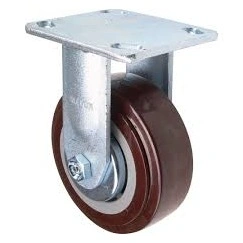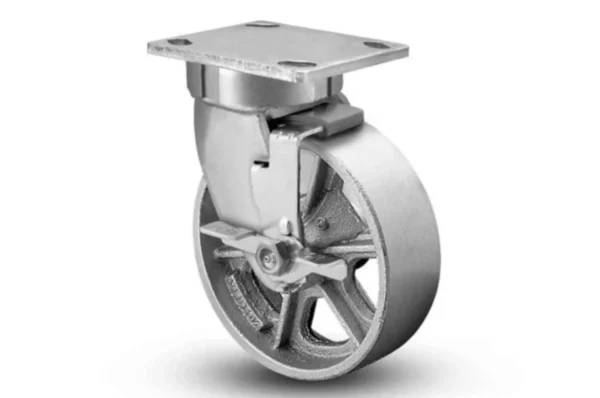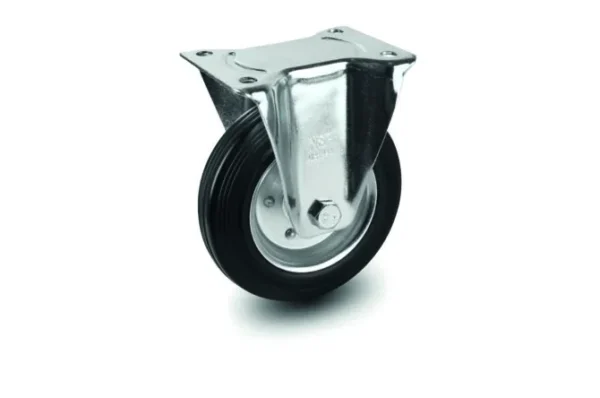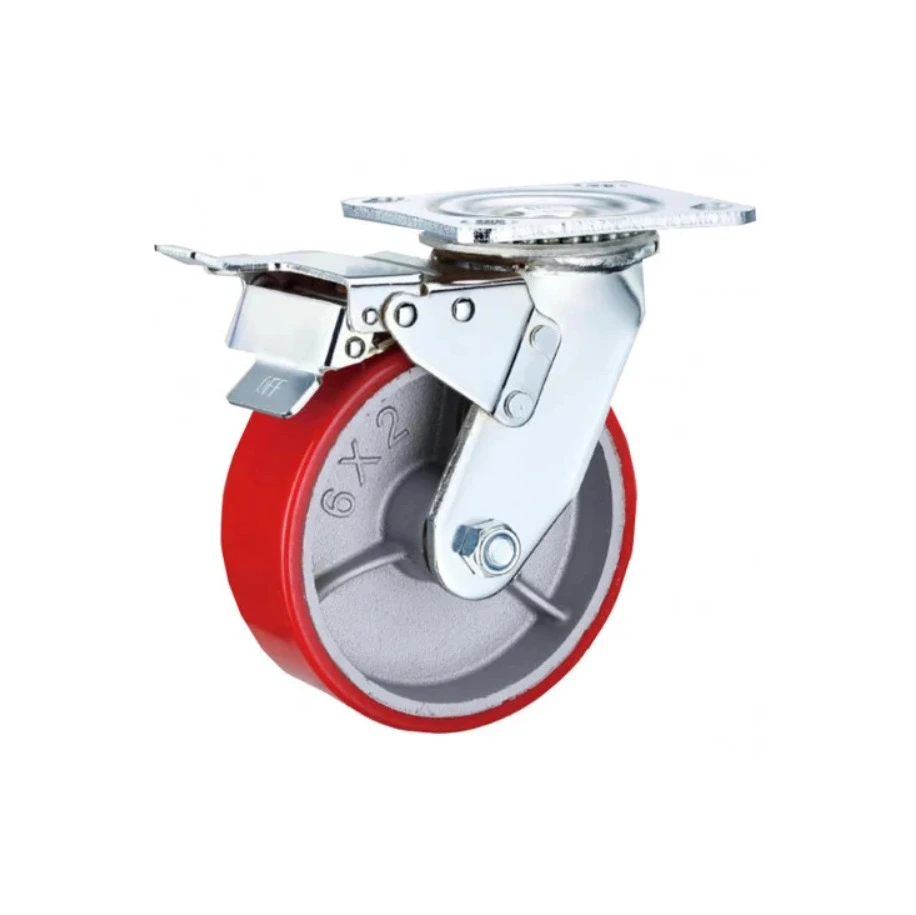
To maximize your safety and productivity, it is paramount that your heavy-duty caster choices are accurate. Choosing an incorrectly sized or weight-capacity caster can put equipment and workers at risk of injury or damage. The most vital consideration when selecting heavy-duty casters is load weight. This factor determines which caster type adequately supports the load and allows the equipment to move safely.
This article will explain in detail how to calculate your load capacity step by step. Plus, it offers many helpful suggestions for choosing the right wheels for your heavy-duty caster.
Why Load Capacity Matters for Heavy-Duty Casters?
Every caster has a weight limit. Ignoring it can lead to serious problems:
– Wheels may deform or break
– The floor may get scratched or damaged
– Equipment may tip over or become unstable
– Movement may become difficult
By calculating load capacity correctly, we ensure safety and durability. It also extends the caster’s life, making it a cost-effective choice.
1: Determine the Total Weight of the Equipment
The first step is to know the total weight of what we need to move. This includes:
- Machinery or equipment weight
- Furniture or storage units
- Any additional load placed on the equipment during use
For example, if we have a storage rack weighing 400 kg and expect it to carry another 200 kilograms of goods, the total weight is 600 kg.
2: Count the Number of Casters
After calculating the equipment’s total weight, the next step is to determine how many casters (wheels) are required to provide the appropriate support. Most equipment has four wheels, but many machine types may use six or more wheels depending on the weight they support.
In general, it applies that the more casters you have supporting a piece of equipment, the less total weight the equipment will place on each caster.
For example:
Total Load = 600 kg
4 will be the maximum allowable weight for each caster or 150 kg/caster (600 kg total divided by four casters). In this particular case, we conclude that 150 kilograms per wheel can be supported, but in most cases, manufacturers provide a number greater than this to allow for a safety factor.
3: Add a Safety Factor
Adding a safety factor helps prevent damage during sudden movements or on uneven floors. A common practice is to increase the required load per caster by 25–50%.
Example:
- Load per caster = 150 kg
- Safety factor = 25% → 150 × 1.25 = 187.5 kg
So, each caster should have a load capacity of at least 188 kg. This ensures stability and durability.
4: Consider Wheel Material
The kind of caster wheel selected determines its load-carrying capacity. Various materials provide suitable applications to suit the load-carrying capacity:
Steel casters: Very sturdy and strong; suitable for heavy machinery (especially in a construction setting).
Polyurethane casters: These casters offer an excellent combination of load capacity & protection to the flooring surfaces.
Rubber casters: They offer excellent smoothness in operation but have lower load capacities than the other types listed.
Nylon wheels: They offer a lightweight, tough alternative that can withstand substantial abuse.
The most critical component in selecting wheels is analyzing how they will perform on different surfaces and in varied environments.
5: Check Caster Size
Larger caster wheels usually handle more weight. They also roll more easily over uneven surfaces.
- 46-inch casters are standard for furniture and light industrial use.
- 6–8 inch or larger are recommended for heavy machinery or warehouse equipment.
Choosing the right size improves mobility and reduces stress on each wheel.
6: Evaluate the Surface and Environment
The caster load capacity is influenced by the design/material of the floor that the caster rolls over. When a smooth, hard surface is available, it is easier to move items across it than across a rough or uneven surface.
Metal and polyurethane wheels with casters work well on concrete. Adding some cushioning to absorb shock will help prevent damage to delicate floors caused by casters on rigid surfaces. Additionally, the environment in which these wheels are used can dictate the material used to make the wheel.
7: Calculate Load for Moving vs. Stationary Use
Load requirements differ for moving and stationary equipment. Casters experience more stress when driving, especially over uneven surfaces or obstacles.
We should always calculate a slightly higher load capacity for mobile applications.
Example:
- Stationary weight per caster = 150 kg
- Add 20% for movement → 150 × 1.2 = 180 kg
- Choose casters rated above 180 kg
This ensures that the heavy-duty casters are not overloaded during operation.
8: Consider Furniture Casters for Lighter Loads
For office furniture or light industrial trolleys, Furniture Casters may be sufficient. We still follow the same load calculation method to ensure safety and mobility.
Choosing casters explicitly designed for furniture ensures smooth rolling and floor protection.
9: Account for Future Load Increases
We should always plan for possible future weight increases. Equipment may be upgraded, or additional items may be stored. Choosing slightly higher-rated heavy-duty casters helps prevent early wear and extends their lifespan.
10: Verify Availability in Your Region
For businesses in the Middle East, we often look for Caster Wheels in UAE. Make sure the selected casters are available locally to avoid delays in installation or replacements. Local suppliers also provide warranties and support.
11: Inspect Caster Quality
Always inspect the build quality:
- Strong frames and mounting plates
- High-quality bearings
- Smooth wheel rotation
- Evenly distributed load support
High-quality heavy-duty caster wheels reduce maintenance and prevent unexpected failures.
12: Maintenance and Longevity
Properly maintained casters last longer and perform better. Lubricate bearings regularly, clean wheels to remove debris, and check for wear. Proper selection based on accurate load calculation reduces maintenance costs over time.
Wrap Up
Calculating load capacity is one of the most critical factors when selecting heavy-duty casters. These factors are essential for ensuring that your equipment can be safely and efficiently moved with the chosen casters.
At Go Caster, we have a comprehensive selection of Heavy Duty Caster Wheels, Industrial Caster Wheels, and Furniture Caster Wheels in UAE. We use this methodology to help eliminate guesswork and provide you with a reliable way to select the right caster for your specific scenario.