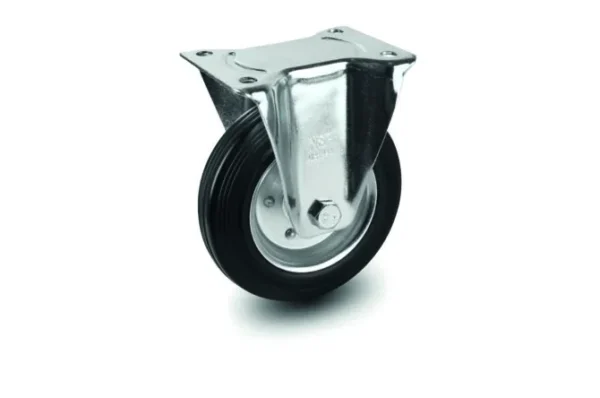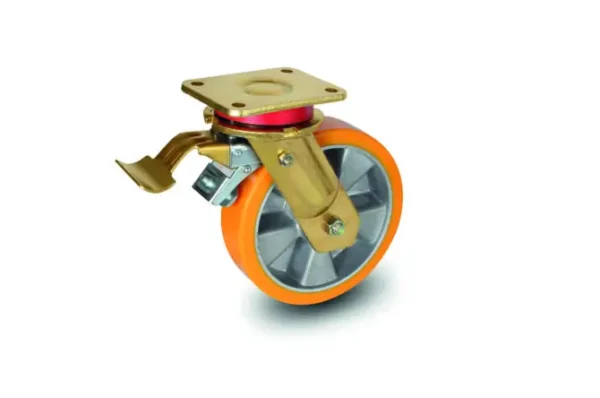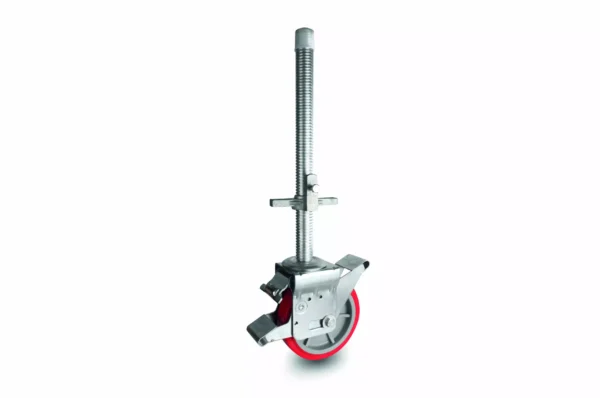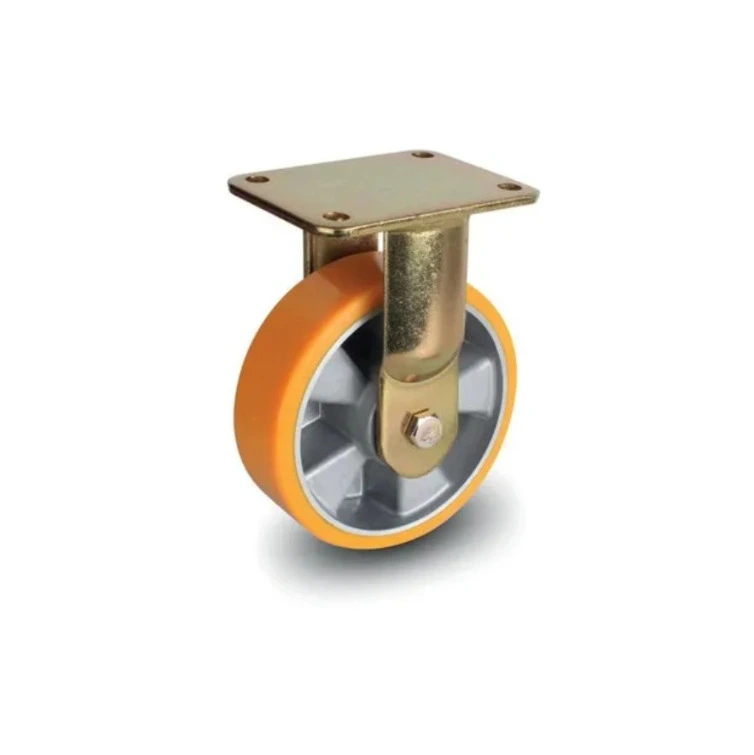
Safety and security are the top priorities of busy industries and work environments. The movement of industrial machines throughout factories, storage areas, hospitals, and office buildings is directly affected by the ability to maintain stability. This, in turn, affects both productivity and workplace safety. An unexpected slight shift in your manufacturing location can lead to production delays, product damage, and serious accidents. This is the primary reason heavy duty casters with brakes play a key role in current mobility systems. Heavy-duty casters provide controlled movement of your equipment when needed and stability when it must remain stationary.
At Go Casters, we understand that mobility without control creates risk. Therefore, we design solutions that combine strength, precision, and safety to keep operations running smoothly.
In this guide, we explain how braking casters reduce equipment movement risks and why they outperform standard wheels. And also explain how industries benefit from investing in secure mobility systems.
Why Equipment Movement Can Become a Serious Safety Hazard?
Equipment mobility improves workflow. However, uncontrolled movement creates several hazards that many facilities underestimate.
For example, heavy machines can roll unintentionally due to:
- Sloped floors
- Vibrations from nearby equipment
- Sudden impact or collision
- Improper loading or weight imbalance
- Smooth or polished surfaces
When movement occurs unexpectedly, it can cause:
- Worker injuries
- Equipment damage
- Production interruptions
- Product loss
- Workplace liability risks
Therefore, mobility must always include control. This is where heavy-duty casters become essential. They transform mobile equipment into stable, secure workstations when movement is not required.
What Makes Heavy Duty Casters With Brakes Different From Standard Wheels?
Standard wheels allow movement. Braking casters control it.
This difference may seem simple, but the engineering behind braking casters is highly specialized. Unlike ordinary wheels, these units combine mobility systems with mechanical locking technology.
Most heavy duty wheels and casters with brakes include:
- High load-bearing construction
- Reinforced wheel materials
- Swivel locking systems
- Total locking mechanisms
- Foot-operated brake controls
Some models stop wheel rotation only. Others lock both wheels and swivel movement. Advanced systems immobilize the entire caster assembly for maximum stability.
Because of this design, equipment stays firmly in position, even under heavy loads or vibration.
How Heavy Duty Casters With Brakes Prevent Unintended Movement?
Let’s explore the specific safety mechanisms that make heavy duty casters with brakes so effective.
1. Immediate Locking Control
Operators can stop movement instantly using foot-activated brakes. This quick response prevents rolling before it becomes dangerous.
2. Resistance Against External Forces
Equipment does not move after the brakes are engaged by vibrations, accidental impact, or varying floor surfaces. The importance of this statement becomes critical in a manufacturing environment that is always in motion.
3. Weight Stabilization
Heavy machinery produces momentum; therefore, it is not safe to assume that even the smallest shift will not develop into a much greater force than expected. Locking casters help counteract this problem by anchoring equipment to the floor.
4. Positioning Accuracy
Many tasks require precise equipment placement. Braking casters maintain alignment, ensuring machinery remains exactly where operators need it.
5. Reduced Human Error
Manual stabilizing methods, such as wedges or blocks, can fail. Integrated braking systems provide consistent and reliable locking.
Together, these features transform mobile equipment into stable operational units.
How Braking Casters Improve Productivity, Not Just Safety?
Safety improvements are obvious. However, braking casters also boost operational efficiency.
When equipment stays stable:
- Workers spend less time repositioning machines
- Setup accuracy improves
- Workflow interruptions decrease
- Equipment maintenance needs decline
- Production timelines remain consistent
Stable machinery operates more efficiently. As a natural progression, productivity will increase. For that reason, several buildings are installing higher-quality wheels and casters in their facilities, regardless of whether they have a safety requirement.
The Role of Material Strength in Movement Control
Braking systems alone cannot ensure safety. Structural strength matters just as much.
High-quality casters typically use:
- Hardened steel frames
- Reinforced mounting plates
- Durable wheel compounds
- Precision brake components
These materials withstand heavy loads without deformation. Consequently, braking mechanisms function reliably over long periods.
Weak or low-grade casters may fail under pressure. When components bend or wear down, braking performance decreases.
Therefore, durability directly supports risk reduction.
How Double-Locking Systems Provide Maximum Stability?
Not all brakes work the same way.
Basic brakes stop wheel rotation. However, swivel motion may still occur. This allows slight equipment shifting.
Double-locking systems eliminate both:
- Wheel rotation
- Swivel movement
This creates full immobilization. Equipment behaves like a fixed installation.
For heavy machinery or sensitive operations, double-locking heavy-duty caster wheels Dubai provides superior safety.
Why Global Industries Demand Advanced Caster Technology?
Global industrial growth has increased demand for high-performance mobility systems. Facilities need stronger, more reliable equipment stabilization.
Dubai is a rapidly growing industrial hub, and many businesses rely heavily on advanced caster systems for their logistics, construction, and manufacturing operations. It stands to reason that this global demand for these products is grounded in the same reality. Mobility without control is unacceptable in today’s industrial environment.
Risk Reduction Through Proper Installation and Maintenance
Even the best braking caster wheels Dubai require proper setup.
To maximize safety, we recommend:
- Correct load distribution across all casters
- Secure mounting hardware
- Regular brake inspection
- Routine cleaning of wheel surfaces
- Timely replacement of worn components
Preventive maintenance ensures braking performance remains consistent over time.
Cost Savings From Preventing Equipment Movement Incidents
Many organizations focus on upfront equipment costs. However, movement-related accidents are far more expensive.
Braking casters help avoid:
- Workplace injury compensation
- Equipment repair expenses
- Operational downtime
- Inventory damage
- Insurance claim increases
Over time, investing in heavy duty casters with brakes often delivers substantial financial savings.
Safety and cost efficiency work together, not separately.
Choosing the Right Heavy Duty Casters With Brakes
Not all facilities require identical solutions. Selection depends on:
- Load capacity requirements
- Floor surface conditions
- Environmental exposure
- Frequency of movement
- Precision positioning needs
Consulting experts ensures proper configuration. Correct selection maximizes both safety and performance.
FAQs
1. How much weight can braking casters support?
Load capacity varies by design. Industrial models can support hundreds to thousands of kilograms per caster.
2. Are all caster brakes the same?
No. Some lock wheel rotation only. Others provide total locking that prevents both rolling and swiveling.
3. Do braking casters work on sloped floors?
Yes. When properly rated and installed, they secure equipment even on inclined surfaces.
4. How often should brakes be inspected?
Routine inspection during scheduled maintenance is recommended, especially in high-use environments.
5. Can braking casters reduce workplace injuries?
Yes. Stabilizing equipment significantly reduces the risk of accidents caused by unintended movement.
Stability Is the Foundation of Safe Mobility
Mobile solutions boost productivity, while stable solutions keep employees safe.
Moving equipment without control is unpredictable. Using an effective locking system enables controlled mobile solutions that promote equipment reliability and security.
At Go Casters, durable, heavy-duty caster wheels Dubai provide both mobility and control. When it is time to move equipment, it will move; when it is necessary to stay still, it will stay still.